· 6 min read
Do we need training to use AI?

A few days ago, Miguel Angel Duran (MiduDev) published a YouTube video claiming that AI trainings are smoke.
I admire Midu a lot, and I understand why he thinks that way, but I personally feel the generalization went too far.
Calling a program a “master” that only teaches you how to use ChatGPT makes no sense. And of course, adding Claude Code to your toolbox does not make you an AI Engineer.
Where I think Midu was too broad is the idea that if there is marketing, then the product is bad. Marketing is a legitimate way to make your product visible, and almost everything you buy has been marketed in one way or another.
That said, that is not the point I want to discuss here. I never felt identified with the training we offer, AI Expert, because we do not sell it as a master, we are clear it is not about becoming an AI Engineer, and so far our students have come organically, with almost no marketing.
Still, it made me reflect on the validity of our training. Are we offering something that you could learn with four YouTube tutorials or by reading documentation?
So I want to talk about the elephant in the room:
Do we need training to use AI?
Specifically, in software development.
The short answer is no (you were not expecting that, right?).
Today, with the amount of free resources on the internet, you can learn to use almost any tool or technology without paying for training.
The real question is the cost. We often forget that time is also money.
And this is not new. It is the decision we make every time we want to learn something.
So the real question becomes:
Is it feasible to learn AI for development on your own?
The other day Andrej Karpathy, who is one of the top AI experts in the world, published a thread on X where he described what staying up to date means to him.
I’ve never felt this much behind as a programmer. The profession is being dramatically refactored as the bits contributed by the programmer are increasingly sparse and between. I have a sense that I could be 10X more powerful if I just properly string together what has become available over the last ~year and a failure to claim the boost feels decidedly like skill issue. There’s a new programmable layer of abstraction to master (in addition to the usual layers below) involving agents, subagents, their prompts, contexts, memory, modes, permissions, tools, plugins, skills, hooks, MCP, LSP, slash commands, workflows, IDE integrations, and a need to build an all-encompassing mental model for strengths and pitfalls of fundamentally stochastic, fallible, unintelligible and changing entities suddenly intermingled with what used to be good old fashioned engineering. Clearly some powerful alien tool was handed around except it comes with no manual and everyone has to figure out how to hold it and operate it, while the resulting magnitude 9 earthquake is rocking the profession. Roll up your sleeves to not fall behind.
The reality is that AI is evolving so fast that staying current on your own is nearly impossible.
Even I, who now focus on this 100%, struggle to keep up.
So you, who work 8 hours a day, maybe 2 hours commuting, have to eat, sleep, socialize, and perhaps take care of family… it is hard to find the time even to follow the basics, let alone apply them.
The future moves in 30-day windows
Another point Midu did not mention is how you can design this kind of training with recorded videos.
In the same thread, one of Karpathy’s replies said:
People who aren’t keeping up even over the last 30 days already have a deprecated world view on this topic.
You often hear that AI is useless because it fails a lot, the code it generates is poor, it gets lost in context, or it cannot handle large codebases.
I only ask you to spend one day with a frontier model (GPT-5.2-Codex or Claude 4.5 Opus). Just tell it in natural language what you want to do.
You will be surprised by the results.
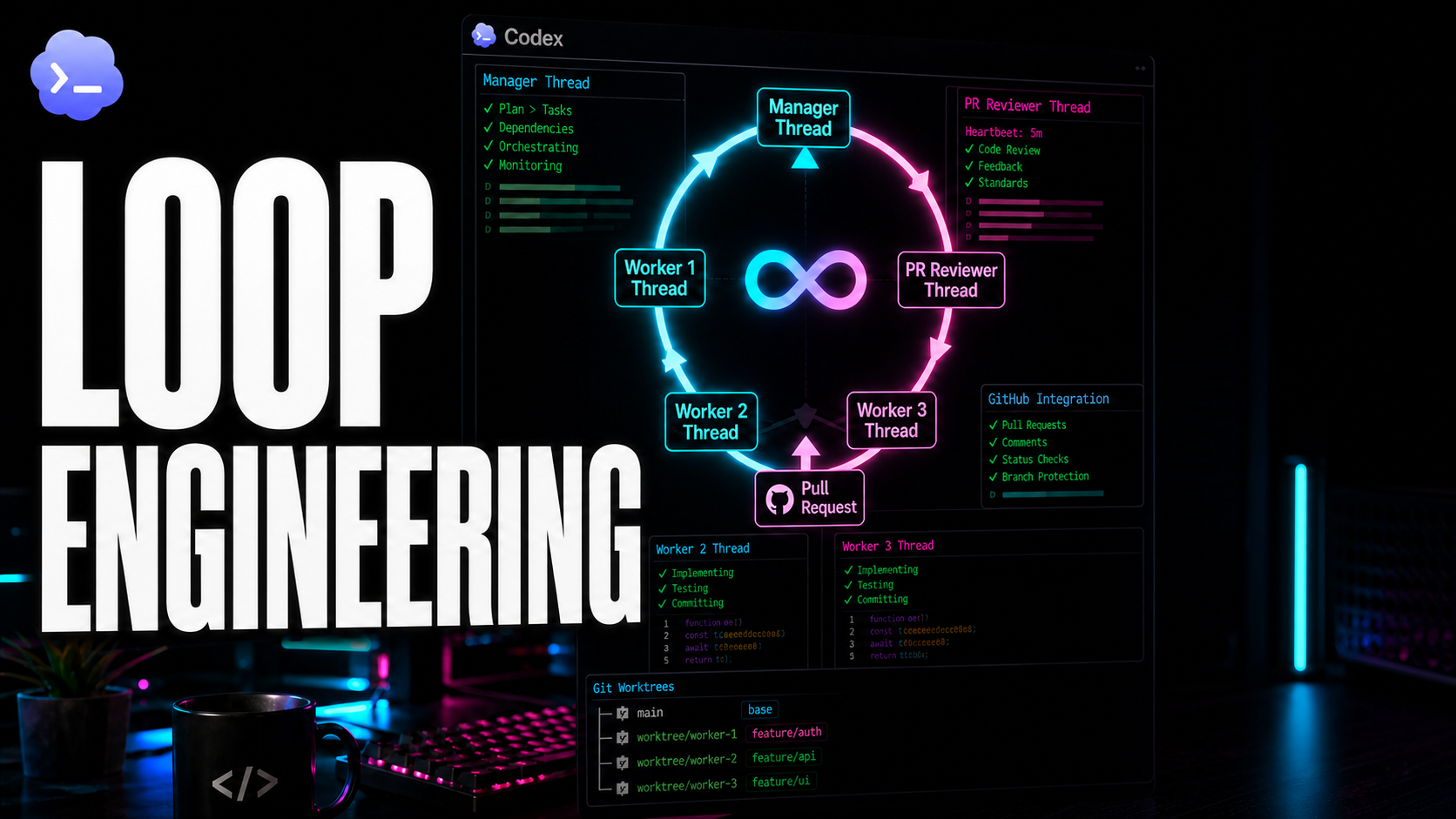
Now add solid context engineering, using and creating your own MCPs, running tools in parallel, applying skills, introducing rapid prototyping tools, weaving this into your daily workflows, and even creating your own agents.
And all of this in a world that changes every month.
A training that teaches AI for software development cannot be static. It has to be alive and evolve with the tech.
That is why our training is live and evolves every cohort. It is six intense weeks where the content changes even between sessions, because the ground shifts that fast. It is not a course to “use ChatGPT”; it is a course to direct tools and processes with AI in your day to day.
Analysis paralysis
There is a psychological phenomenon called analysis paralysis: we overanalyze a situation so much that we end up making no decision.
This happens especially when the cognitive load is high, and even more when the amount of content is overwhelming, because filtering what matters is exhausting.
And our brain starts to look for excuses:
- AI is a bubble.
- The code it generates is bad.
- It will introduce bugs we will not be able to detect.
- Insert your own here.
The reality is that AI is transforming our industry at breakneck speed, and if you do not hop on the train now, it will be very hard to catch up later.
Conclusion
Yes, this is marketing. Maybe the whole article is. But I am telling it from the reality I live every day. Any biased opinion, one way or another, is marketing.
Months ago, Nino and I realized we were spending so many hours keeping up that it made sense to turn it into a system that helps other developers do the same.
We made it live, so it could stay alive and adapt quickly.
We made it lifetime access, so you can repeat it as many times as you need, because every cohort requires updates and fresh content.
Students from the first edition are delighted; you can see their testimonials here.
The general feedback is that you start believing you know the limits of what you can do with AI, and you end up with a bunch of unlocked ideas and new ways of working that you had not imagined. That jump - from “typing” to “directing” - is exactly the goal.
And the projects they are building prove it. Some examples:
- Santiago built an MCP that recommends among 6,000+ Odoo plugins based on client needs and project context.
- Daniel built a cross-platform Flutter mobile app for unified incident management in critical infrastructure.
- Miguel Angel built a digital wardrobe with a front and back that uses AI to create outfits based on weather, occasion, and personal style.
- Juan built an app that organizes your files using local AI.
- Miguel built Euroleague Stats AI, a web app that lets you query Euroleague stats with natural language.
If you are interested, you can see all the details on the AI Expert course page.
Until December 31 (yes, another marketing tactic), we have a special offer that includes my three classic trainings (Kotlin, Compose, and Testing) for free.
The next edition starts on March 9, 2026.
Are you in, or do you think you can learn all this by yourself on YouTube?